Skip to content
Free Excel Tutorials
  • Home
  • Excel For Beginners
  • Excel Intermediate
  • Advanced Excel For Experts

Data Analysis

  • How to Create One and Two Variable Data Tables in Excel
  • Filter Data Based on Date in Excel
  • How To Create Pareto Chart in Excel
  • How to create running total in an Excel Table
  • Conflicting Multiple Conditional Formatting Rules in Excel

References

  • Basic INDEX MATCH approximate in Excel
  • Multi-criteria lookup and transpose in Excel
  • How to use Excel TRANSPOSE Function
  • How to use Excel INDIRECT Function
  • How to retrieve first match between two ranges in Excel

Data Validations

  • Excel Data validation whole percentage only
  • Data validation must not exist in list
  • Excel Data validation date in next 30 days
  • Excel Data validation require unique number
  • Excel Data validation unique values only

Excel Import/Export Text Files

by

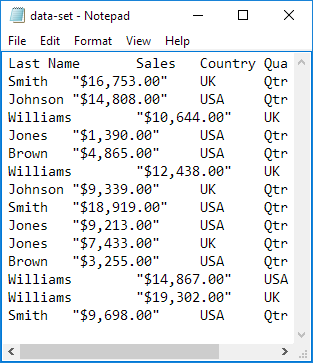
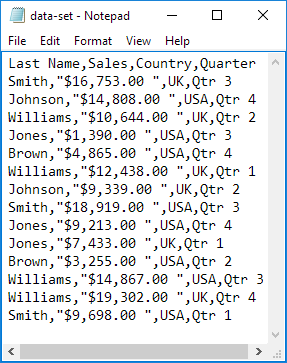
This article describes how to import or export text files. Text files can be comma separated (.csv) or tab separated (.txt)

Import

To import text files, execute the following steps.

1. On the File tab, click Open.

2. Click Browse.

3. Select Text Files from the drop-down list.
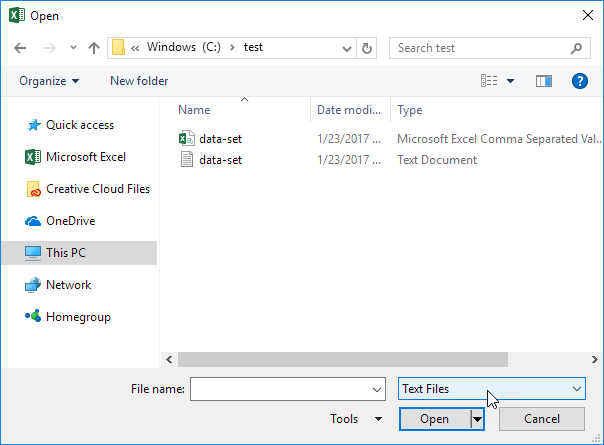
4a. To import a .csv file, select the Microsoft Excel Comma Separated Values File and click Open. That’s all.

4b. To import a .txt file, select the Text Document and click Open. Excel launches the Text Import Wizard.

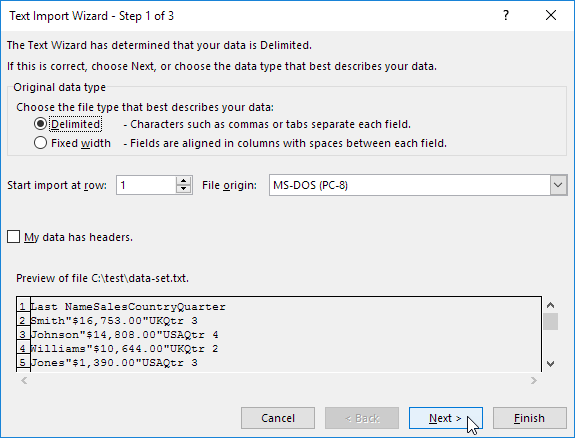
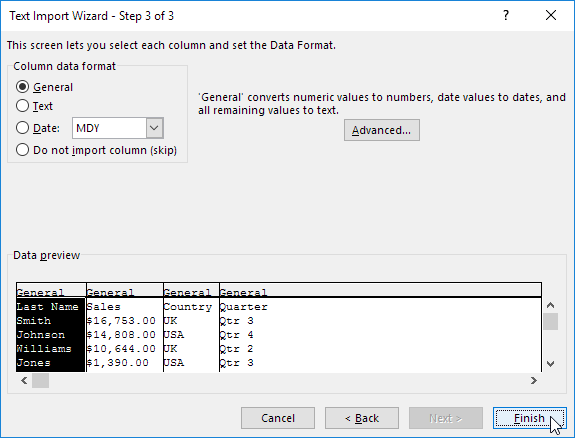
5. Choose Delimited and click Next.
6. Clear all the check boxes under Delimiters except for the Tab check box and click Next.
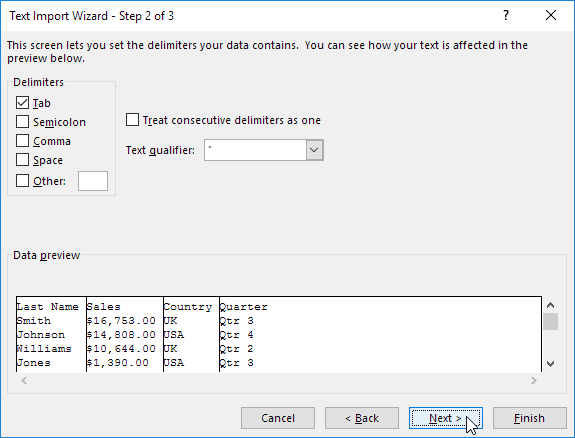
7. Click Finish.
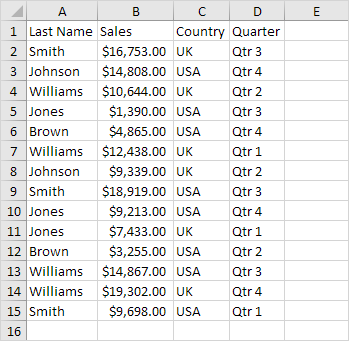
Result:
Export

To export text files, execute the following steps.

1. Open an Excel file.

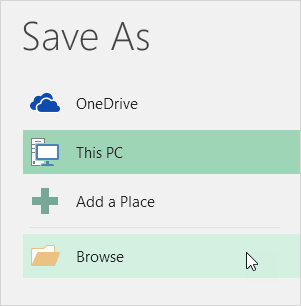
2. On the File tab, click Save As.

3. Click Browse.
4. Select Text (Tab delimited) or CSV (Comma delimited) from the drop-down list.
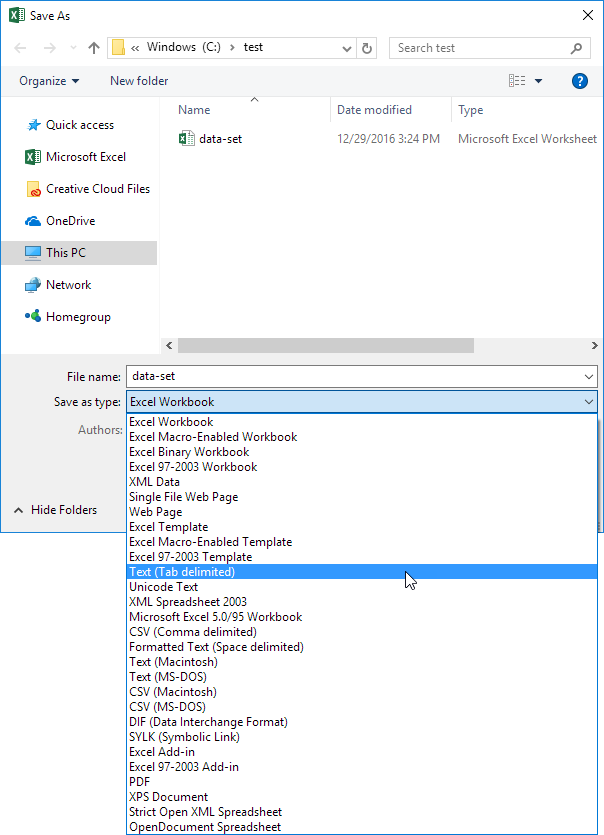
5. Click Save.

Result. A .csv file (comma separated) or a .txt file (tab separated).
Post navigation

Previous Post:

VLOOKUP without #N/A error in Excel

Next Post:

Manipulating text strings using Left, Mid, Right, Len, Substitute in Excel

Leave a Reply Cancel reply

Your email address will not be published. Required fields are marked *

Learn Basic Excel

Ribbon
Workbook
Worksheets
Format Cells
Find & Select
Sort & Filter
Templates
Print
Share
Protect
Keyboard Shortcuts

Categories

  • Charts
  • Data Analysis
  • Data Validation
  • Excel Functions
    • Cube Functions
    • Database Functions
    • Date and Time Functions
    • Engineering Functions
    • Financial Functions
    • Information Functions
    • Logical Functions
    • Lookup and Reference Functions
    • Math and Trig Functions
    • Statistical Functions
    • Text Functions
    • Web Functions
  • Excel VBA
  • Excel Video Tutorials
  • Formatting
  • Grouping
  • Others

Logical Functions

  • XOR function: Description, Usage, Syntax, Examples and Explanation
  • How to return blank in place of #DIV/0! error in Excel
  • NOT function: Description, Usage, Syntax, Examples and Explanation
  • IFS function: Description, Usage, Syntax, Examples and Explanation
  • IF with wildcards in Excel

Date Time

  • TODAY function: Description, Usage, Syntax, Examples and Explanation
  • YEAR function: Description, Usage, Syntax, Examples and Explanation
  • Count times in a specific range in Excel
  • How to calculate nth day of year in Excel
  • MONTH function: Description, Usage, Syntax, Examples and Explanation

Grouping

  • Group times into 3 hour buckets in Excel
  • Map text to numbers in Excel
  • Map inputs to arbitrary values in Excel
  • How to randomly assign people to groups in Excel
  • Group arbitrary text values in Excel

General

  • How to calculate percentage discount in Excel
  • Spell Check in Excel
  • Share Excel data with Word documents
  • How to fill cell ranges with random text values in Excel
  • How to fill cell ranges with random number from fixed set of options in Excel
© 2025 xlsoffice . All Right Reserved. | Teal Smiles | Abbreviations And Their Meaning