
Skip to content
Free Excel Tutorials
  • Home
  • Excel For Beginners
  • Excel Intermediate
  • Advanced Excel For Experts

Data Analysis

  • Get column name from index in Excel Table
  • Subtotal function in Excel
  • Use Data Form to input, edit and delete records in Excel
  • How to calculate current stock or inventory in Excel
  • What-If Analysis: Scenarios and Goal Seek in Excel

References

  • How to use Excel COLUMN Function
  • Count rows that contain specific values in Excel
  • Two-column Lookup in Excel
  • How to use Excel TRANSPOSE Function
  • How to use Excel MMULT Function

Data Validations

  • Excel Data validation unique values only
  • Excel Data validation specific characters only
  • How To Create Drop-down List in Excel
  • Excel Data validation date in next 30 days
  • Excel Data validation require unique number

Excel Default Templates

by

Book.xltx and Sheet.xltx are two special templates you can create and add to the XLStart folder. As a result, Excel uses Book.xltx as the basis for new workbooks and Sheet.xltx as the basis for new worksheets.

Book.xltx

To create Book.xltx, execute the following steps.

1. Create a workbook. For example, change the row height of all rows on the first sheet to 30 pixels.
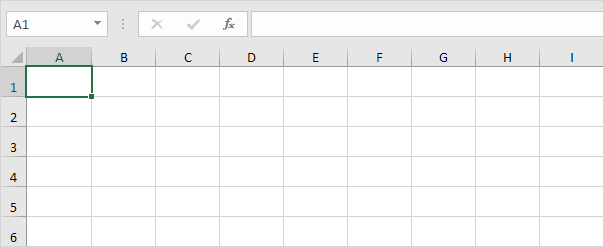

Note: you can also add a header or footer, change the styles, add or delete sheets, etc.

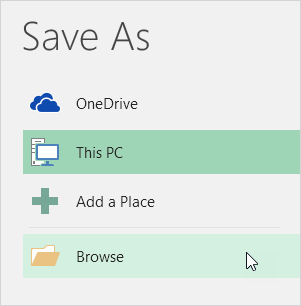
2. On the File tab, click Save As.

3. Click Browse.
4. Enter Book as filename.

5. Select Excel Template (*.xltx) from the drop-down list.
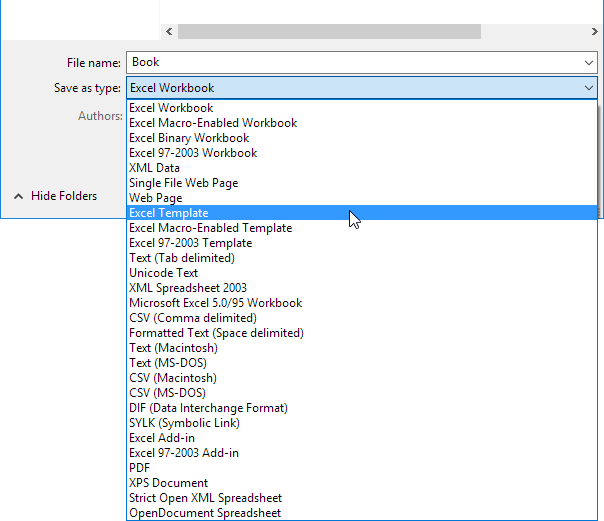
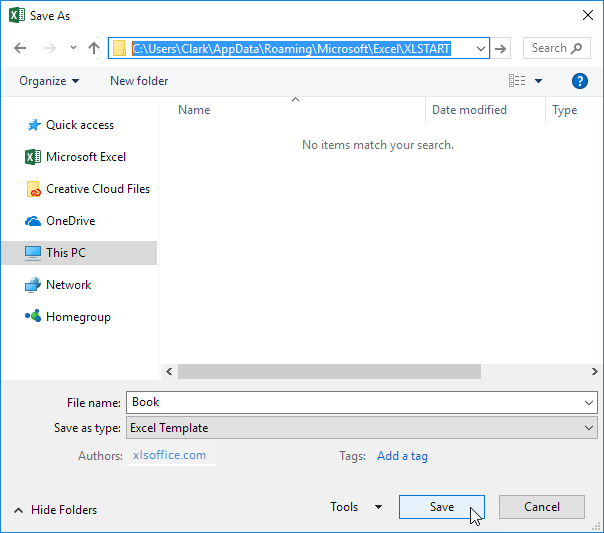
Excel automatically activates the Templates folder. Be careful not to store the template here. Instead, go to the XLStart folder. It’s usually located here:

C:\Users\<username>\AppData\Roaming\Microsoft\Excel\XLSTART

6. Click Save.
7. Close and reopen Excel.

Excel creates a new workbook based on Book.xltx.
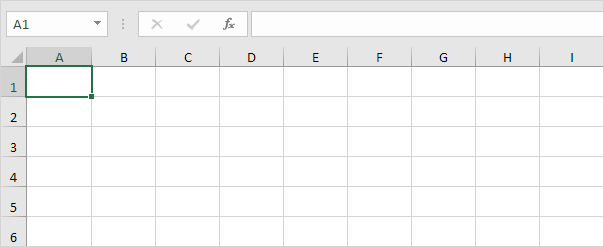
Note: to stop using Book.xltx, simply delete the file from the XLStart folder. To edit Book.xltx, on the File tab, click Open and then click Browse, to open the template. Edit the file and save the file to its original location.

Sheet.xltx

Repeat the previous steps, but now create a workbook with a single sheet and name it Sheet.xltx. This template will be used as the basis for new worksheets inserted into existing workbooks.

Post navigation

Previous Post:

VLOOKUP without #N/A error in Excel

Next Post:

Manipulating text strings using Left, Mid, Right, Len, Substitute in Excel

Leave a Reply Cancel reply

Your email address will not be published. Required fields are marked *

Learn Basic Excel

Ribbon
Workbook
Worksheets
Format Cells
Find & Select
Sort & Filter
Templates
Print
Share
Protect
Keyboard Shortcuts

Categories

  • Charts
  • Data Analysis
  • Data Validation
  • Excel Functions
    • Cube Functions
    • Database Functions
    • Date and Time Functions
    • Engineering Functions
    • Financial Functions
    • Information Functions
    • Logical Functions
    • Lookup and Reference Functions
    • Math and Trig Functions
    • Statistical Functions
    • Text Functions
    • Web Functions
  • Excel VBA
  • Excel Video Tutorials
  • Formatting
  • Grouping
  • Others

Logical Functions

  • How to use Excel TRUE Function
  • How to use IFS function in Excel
  • Not Equal To ‘<>‘ operator in Excel
  • IF with wildcards in Excel
  • How to use Excel XOR Function

Date Time

  • How to calculate most recent day of week in Excel
  • Add business days to date in Excel
  • Add workdays to date custom weekends in Excel
  • How to get year from date in Excel
  • WORKDAY.INTL function: Description, Usage, Syntax, Examples and Explanation

Grouping

  • Map inputs to arbitrary values in Excel
  • How to randomly assign people to groups in Excel
  • Group numbers at uneven intervals in Excel
  • Group times into unequal buckets in Excel
  • Calculate conditional mode with criteria in Excel

General

  • How to choose page/paper size in Excel before Printing
  • How to create dynamic worksheet reference in Excel
  • How to calculate project complete percentage in Excel
  • How to test a range for numbers in Excel
  • How to calculate percent variance in Excel
© 2025 xlsoffice . All Right Reserved. | Teal Smiles | Abbreviations And Their Meaning