
Skip to content
Free Excel Tutorials
  • Home
  • Excel For Beginners
  • Excel Intermediate
  • Advanced Excel For Experts

Data Analysis

  • Error Bars in Excel
  • Excel Bar Chart
  • Add Outline to Data in Excel
  • How to Create Column Chart in Excel
  • Managing Conditional Formatting Rules in Excel

References

  • Last row number in range
  • How to use Excel VLOOKUP Function
  • How to get address of named range in Excel
  • Lookup entire row in Excel
  • How to get last row in mixed data with blanks in Excel

Data Validations

  • Excel Data validation unique values only
  • Excel Data validation don’t exceed total
  • Excel Data validation with conditional list
  • How To Create Drop-down List in Excel
  • Excel Data validation date in next 30 days

Excel Workbook Views

by

Excel offers three workbooks views, Normal, Page Layout and Page Break Preview.

Normal

At any time, you can switch back to Normal view.

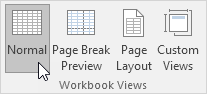
1. On the View tab, in the Workbook Views group, click Normal.
Result:
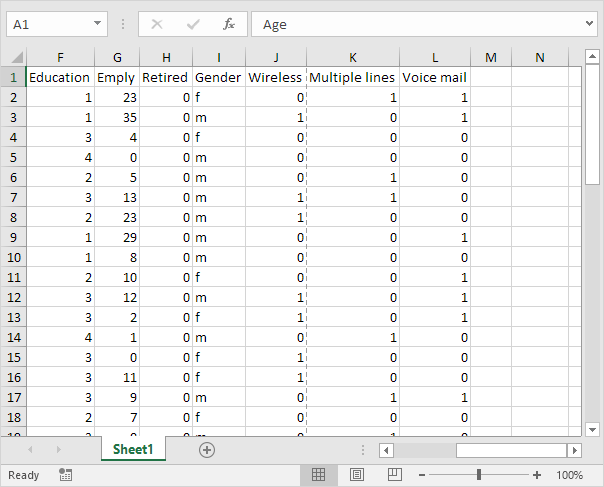
Note: if you switch to another view and return to Normal view, Excel displays page breaks. Close and reopen the Excel file to hide these page breaks. To always hide page breaks for this worksheet, click File, Options, Advanced, scroll down to Display options for this worksheet and uncheck Show page breaks.

Page Break Preview

Page Break Preview gives you a nice overview of where pages break when you print the document. Use this view to easily click and drag page breaks.

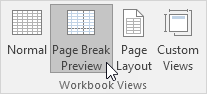
1. On the View tab, in the Workbook Views group, click Page Break Preview.
Result:
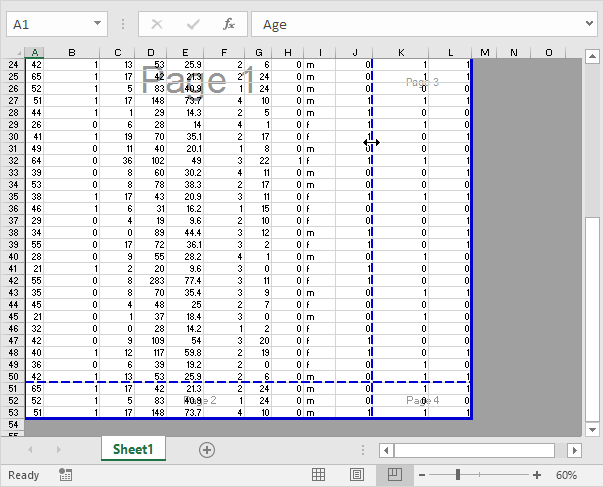
Note: click and drag the page breaks to fit all the information on one page. Be careful, Excel doesn’t warn you when your printout becomes unreadable. By default, Excel prints down, then over. In other words, it prints all the rows for the first set of columns. Next, it prints all the rows for the next set of columns, etc. (take a look at the page numbers in the picture above to get the idea). To switch to Print over, then down, click File, Print, Page Setup, on the Sheet tab, under Page order, click Over, then down.

Page Layout

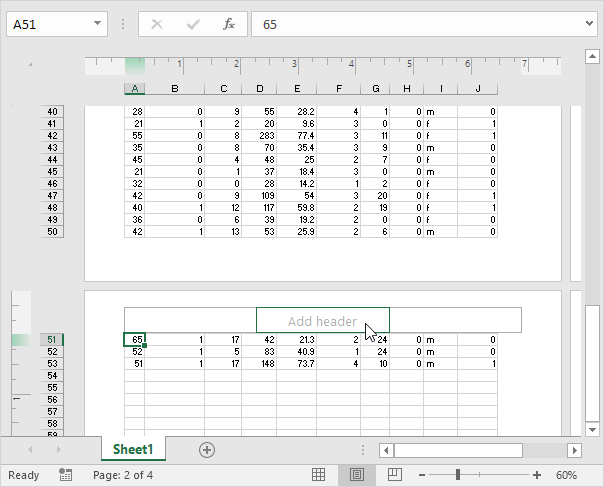
Use Page Layout view to see where pages begin and end, and to add headers and footers.

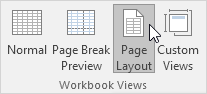
1. On the View tab, in the Workbook Views group, click Page Layout.
Result:
Post navigation

Previous Post:

VLOOKUP without #N/A error in Excel

Next Post:

Manipulating text strings using Left, Mid, Right, Len, Substitute in Excel

Leave a Reply Cancel reply

Your email address will not be published. Required fields are marked *

Learn Basic Excel

Ribbon
Workbook
Worksheets
Format Cells
Find & Select
Sort & Filter
Templates
Print
Share
Protect
Keyboard Shortcuts

Categories

  • Charts
  • Data Analysis
  • Data Validation
  • Excel Functions
    • Cube Functions
    • Database Functions
    • Date and Time Functions
    • Engineering Functions
    • Financial Functions
    • Information Functions
    • Logical Functions
    • Lookup and Reference Functions
    • Math and Trig Functions
    • Statistical Functions
    • Text Functions
    • Web Functions
  • Excel VBA
  • Excel Video Tutorials
  • Formatting
  • Grouping
  • Others

Logical Functions

  • OR function: Description, Usage, Syntax, Examples and Explanation
  • AND function: Description, Usage, Syntax, Examples and Explanation
  • How to use Excel AND Function
  • TRUE function: Description, Usage, Syntax, Examples and Explanation
  • How to use Excel FALSE Function

Date Time

  • Get fiscal year from date in Excel
  • How to calculate Next working/business day in Excel
  • Add decimal minutes to time in Excel
  • Basic Overtime Calculation Formula in Excel
  • Next biweekly payday from date in Excel

Grouping

  • Map text to numbers in Excel
  • Map inputs to arbitrary values in Excel
  • Group times into unequal buckets in Excel
  • How to randomly assign people to groups in Excel
  • How to randomly assign data to groups in Excel

General

  • How to count total columns in range in Excel
  • Subtotal by invoice number in Excel
  • Common Errors in Excel
  • 44 Practical Excel IF function Examples
  • How to Create Calendar in Excel
© 2026 xlsoffice . All Right Reserved. | Teal Smiles | Abbreviations And Their Meaning