
Skip to content
Free Excel Tutorials
  • Home
  • Excel For Beginners
  • Excel Intermediate
  • Advanced Excel For Experts

Data Analysis

  • Create Scatter Chart in Excel
  • Conditional Formatting Icon Sets Examples in Excel
  • How to combine 2 or more chart types in a single chart in Excel
  • Example of COUNTIFS with variable table column in Excel
  • Conditional Formatting Color Scales Examples in Excel

References

  • Excel Advanced Lookup using Index and Match Functions
  • CHOOSE function: Description, Usage, Syntax, Examples and Explanation
  • How to get first row number in range in Excel
  • How to use Excel OFFSET function
  • How to get last column number in range in Excel

Data Validations

  • Excel Data validation specific characters only
  • Excel Data validation date in specific year
  • Excel Data validation date in next 30 days
  • Excel Data validation require unique number
  • Excel Data validation don’t exceed total

How to Break Worksheets into Pages in Excel

by

Insert a page break in Excel to specify where a new page will begin in the printed copy.

To insert a horizontal page break, execute the following steps.

1. Select the first row of the new page.
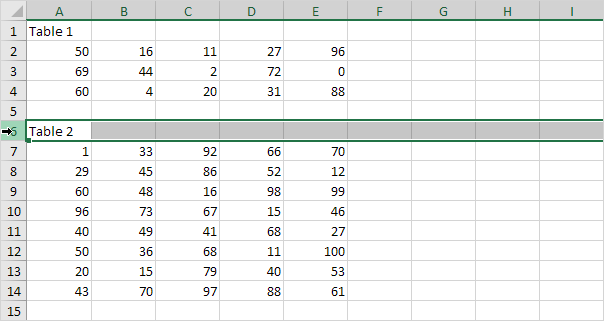
2. On the Page Layout tab, in the Page Setup group, click Breaks.
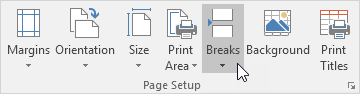
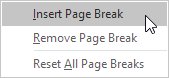
3. Click Insert Page Break.
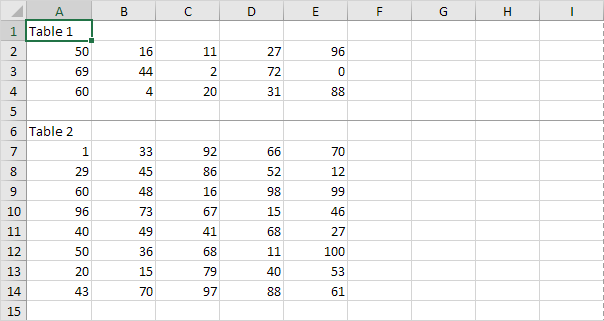
Excel displays a solid line (manual page break) to show you where the new page begins. Dashed lines are page breaks inserted automatically by Excel.
Note: in a similar way, you can select a column to insert a vertical page break.

4. On the File tab, click Print for a print preview.
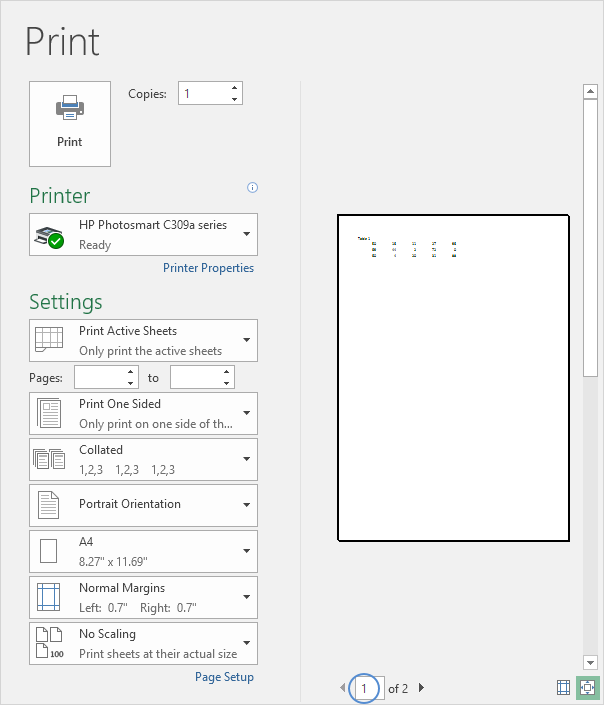
 

Note: to remove a horizontal page break, select a cell below the page break that you want to remove and click Breaks, Remove Page Break. To remove all manual page breaks, click Breaks, Reset All Page Breaks. You cannot remove automatic page breaks.

Post navigation

Previous Post:

VLOOKUP without #N/A error in Excel

Next Post:

Manipulating text strings using Left, Mid, Right, Len, Substitute in Excel

Leave a Reply Cancel reply

Your email address will not be published. Required fields are marked *

Learn Basic Excel

Ribbon
Workbook
Worksheets
Format Cells
Find & Select
Sort & Filter
Templates
Print
Share
Protect
Keyboard Shortcuts

Categories

  • Charts
  • Data Analysis
  • Data Validation
  • Excel Functions
    • Cube Functions
    • Database Functions
    • Date and Time Functions
    • Engineering Functions
    • Financial Functions
    • Information Functions
    • Logical Functions
    • Lookup and Reference Functions
    • Math and Trig Functions
    • Statistical Functions
    • Text Functions
    • Web Functions
  • Excel VBA
  • Excel Video Tutorials
  • Formatting
  • Grouping
  • Others

Logical Functions

  • How to use Excel TRUE Function
  • NOT function: Description, Usage, Syntax, Examples and Explanation
  • FALSE function: Description, Usage, Syntax, Examples and Explanation
  • IFS function: Description, Usage, Syntax, Examples and Explanation
  • OR function: Description, Usage, Syntax, Examples and Explanation

Date Time

  • Two ways to sum time over 30 minutes in Excel
  • WORKDAY.INTL function: Description, Usage, Syntax, Examples and Explanation
  • Add days exclude certain days of week in Excel
  • How to enter Today’s Date or Static Date and Time in Excel
  • Roll back weekday to Friday base on a particular date in Excel

Grouping

  • Group times into 3 hour buckets in Excel
  • How to randomly assign people to groups in Excel
  • Map text to numbers in Excel
  • How to randomly assign data to groups in Excel
  • Running count group by n size in Excel

General

  • Create dynamic workbook reference to another workbook in Excel
  • How to password protect excel sheet?
  • How to calculate percent of goal in Excel
  • Count cells that do not contain errors in Excel
  • How to add sequential row numbers to a set of data in Excel
© 2026 xlsoffice . All Right Reserved. | Teal Smiles | Abbreviations And Their Meaning